






Return of the Bottle Tube
Author information

Loop
Ross Macdonald
6 min read
The best ideas in fly fishing, or any walk of life, earn their place through simple utility. They are shaped by use, refined over time, and trusted because they work.
The Loop Bottle Tube is one of those ideas. Like many developments, it came from the riverbank rather than the drawing board. The original model was developed in‑house at a time when design was driven by anglers and tyers working side by side, refined through use rather than attributed to any single hand. Decades after its introduction, the bottle tube remains a practical, balanced, and versatile way to tie and fish salmon flies.
Our decision to bring it back reflects a simple recognition: this is a product that still does its job exceptionally well.
On a personal note, as a keen fly tyer, this is one of those rare passion projects you occasionally stumble into. The conversation with the team on the reintroduction of the tube was brief and affirmative. And here we are; back in business thanks to a bit of luck and some skilled design.
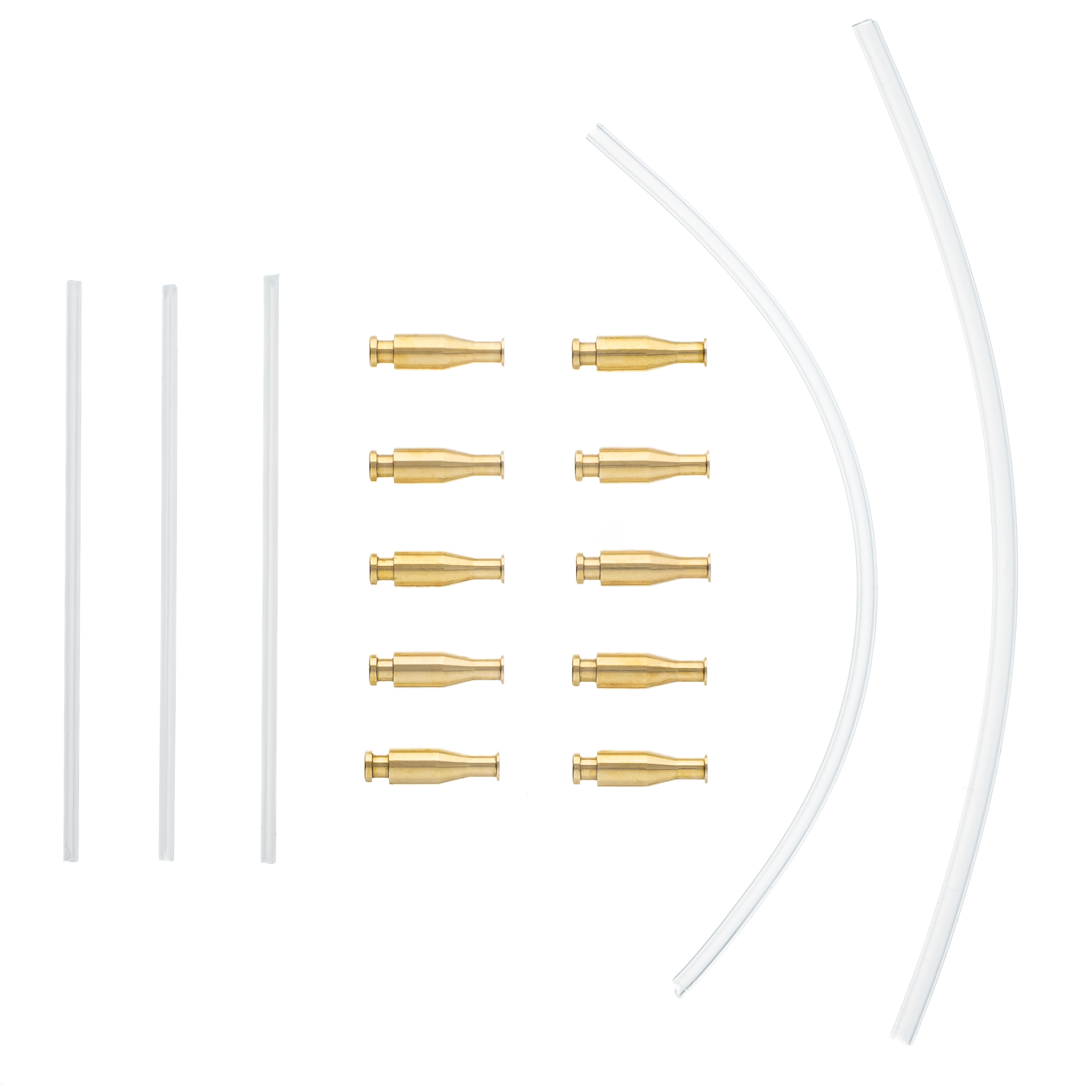
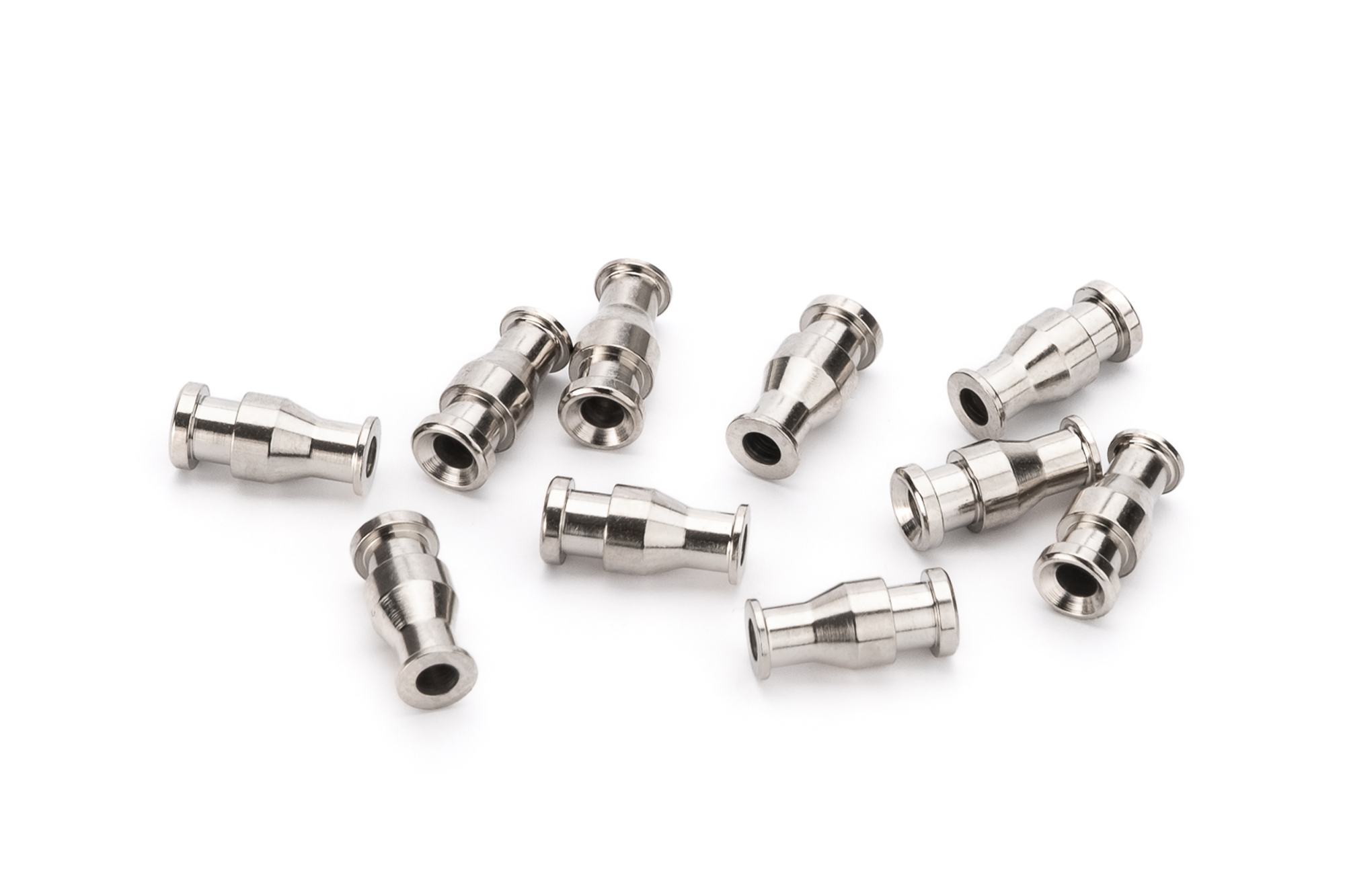
The bottle tube comes in three sizes and two colours (gold and silver). In addition to the two original sizes of 12mm and 16mm, we have introduced a new size – a 9 mm – to broaden the range of use. The bore diameter has been increased to take the industry standard 1.8mm liner. In addition, the packs also contain a piece of silicon tubing for those who prefer a fixed hook set up and a piece of tubing that slides over the knot and the eye of the hook for those of us who prefer the free‑swinging style.
What Is a Bottle Tube?
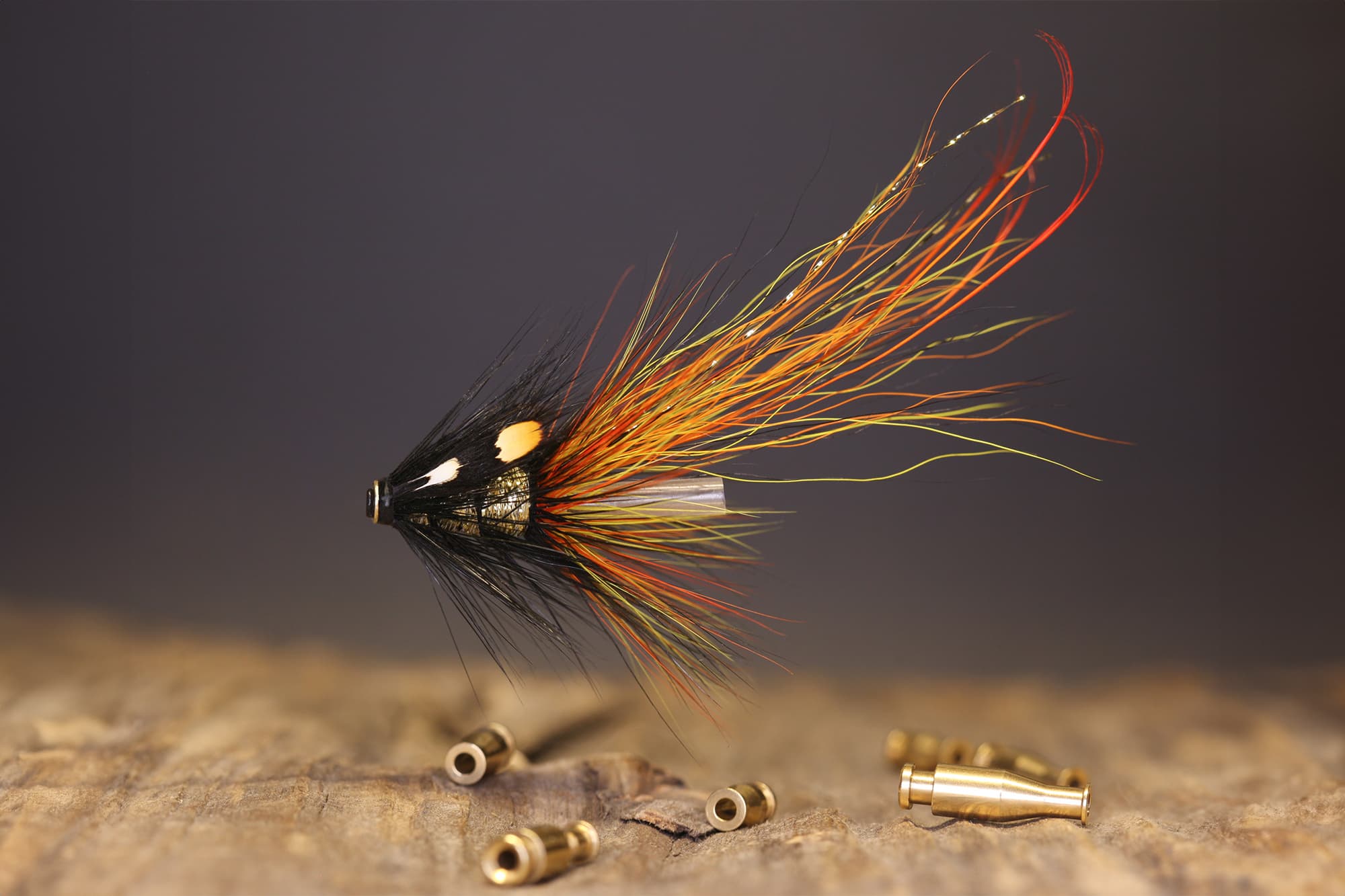
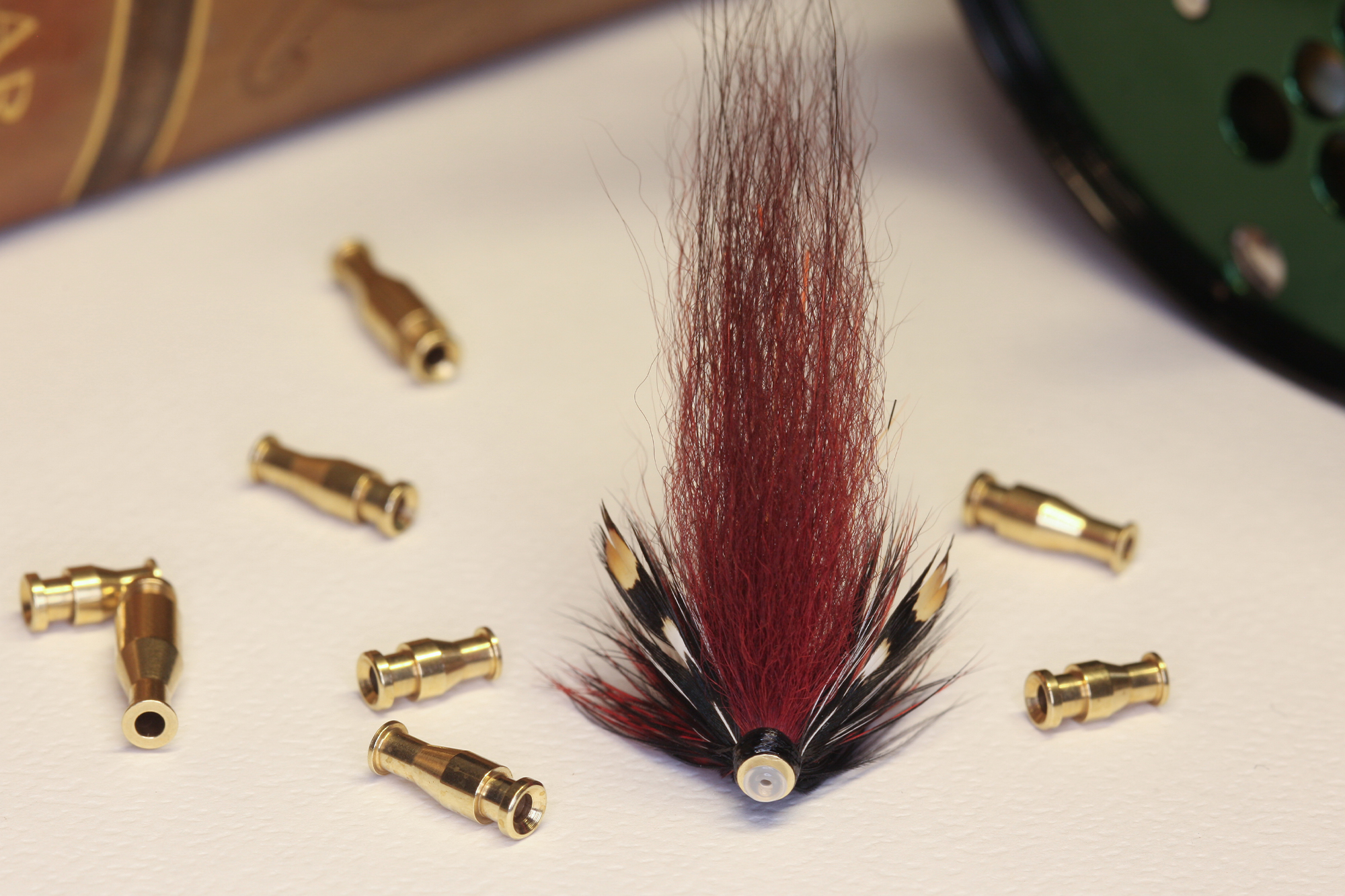
At its simplest, a bottle tube is a short metal tube with a flared lip. Standing on its end it resembles a bottle – including a slim neck which helps reduce bulk at the head of the finished fly. The tube shape flares, creating a natural shoulder for hackles and wings. It also concentrates mass towards the front of the fly. Bottle tubes also lend themselves to minimalist tying. A little bit of dubbing, a flowing hackle and a seductive, slinky wing is all that is required for a highly effective tube fly.
A Scandinavian Lineage
Bottle tubes emerged as part of a wider movement among salmon and sea trout anglers that came to define modern tube fly design.
In places like Mörrum, fly tyers and fishers began refining tube flies not only just to show off to friends, but to solve real problems: durability, balance, and effectiveness in heavy water. Short metal tubes made from brass and other materials became a foundation for what we know today as `Scandi Style of tube fly design – like a mother sauce in cooking. Lars Terkildsen’s Fish Shop Mörrum AB was a hive of activity as locals embraced the emergent style ensuring that the Scandi tube fly revolution, quickly became the predominant style of tube fly.
From there, ideas spread quickly, leading to some great products. The Mörrum Tube, US tubes, Yuri Shumakov’s meticulously balanced designs, and the work of legendary Scandinavian innovators like Mikael Frödin, Håkan Norling and Ulf Sill, to name but a few, all pushed tube flies forward through a shared focus on function and with a good eye for style. Here in the UK the Scandi style began to take root, particularly here on Royal Deeside, around the turn of the century. The ‘Scandi style,’ was embraced by the locals and flies such as the Dee Monkey, designed by Jimi Lauridsen of Denmark, are now a permanent fixture on Scottish salmon rivers.
Loop was a key actor within that wider ecosystem, just one of many, operating inside a culture that values problem‑solving over decoration (mostly) and results over received dogma. Our bottle tube became part of that wave, and I cannot tell you how pleased I am to be part of the team that has returned it to the market.
Features/ Benefits
- Simple, intuitive tying
- Consistent balanced profile
- Durable and effective
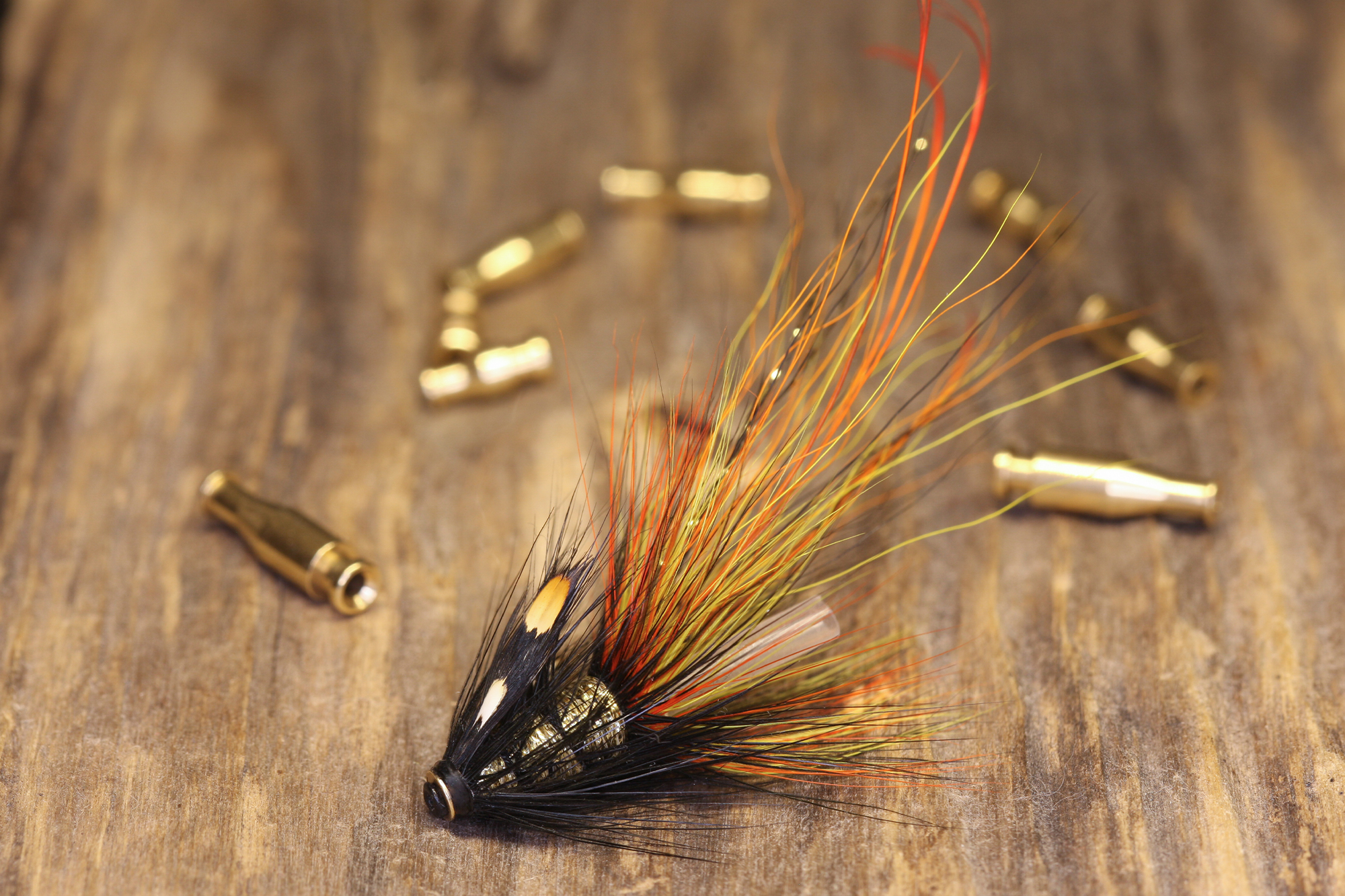
For fox-wing, Monkey, and Scandi-style flies, bottle tubes are particularly effective. With no body dressing required, the fly stays slim. Materials breathe freely and the fly swims seductively. And because most of the mass sits at the front, the fly stabilises quickly after the cast.
Free-Swinging Hooks
A free‑swinging hook is an effective and straightforward way to rig a bottle tube.
Instead of fixing the hook directly to the tube, a short piece of soft tubing is pushed over the knot and hook eye. The hook sits behind the fly, which can rotate freely on the leader and find its natural keel. This set up also allows you to fish slightly heavier leaders without killing the movement of the tube.
Why We Brought the Bottle Tube Back
When we decided to reintroduce the bottle tube, the brief was not to recreate a museum piece. It was to make an innovative idea to work better for modern anglers.
The updated Loop Bottle Tube:
- Accepts standard liners
- Is available in a new 9 mm size
- Retains the clean, functional shape that made it effective in the first place
The update is deliberately restrained, as it should be. When something already works, refinement matters more than reinvention.
What Bottle Tubes Represent for Loop
Bottle tubes reflect a way of thinking that has defined Scandinavian fly fishing for decades:
- Keep it simple
- Solve real problems
- Strip away what does not help
That philosophy shaped Loop from the beginning – from large arbour reels to short shooting heads, from rods to flies. The bottle tube fits naturally into that lineage.
It is one of several established ways to tie and fish a tube fly. For anglers who value balance, durability, and clean function, it remains a dependable choice.
Often, the most effective choice is simply the one that continues to work without asking for attention.